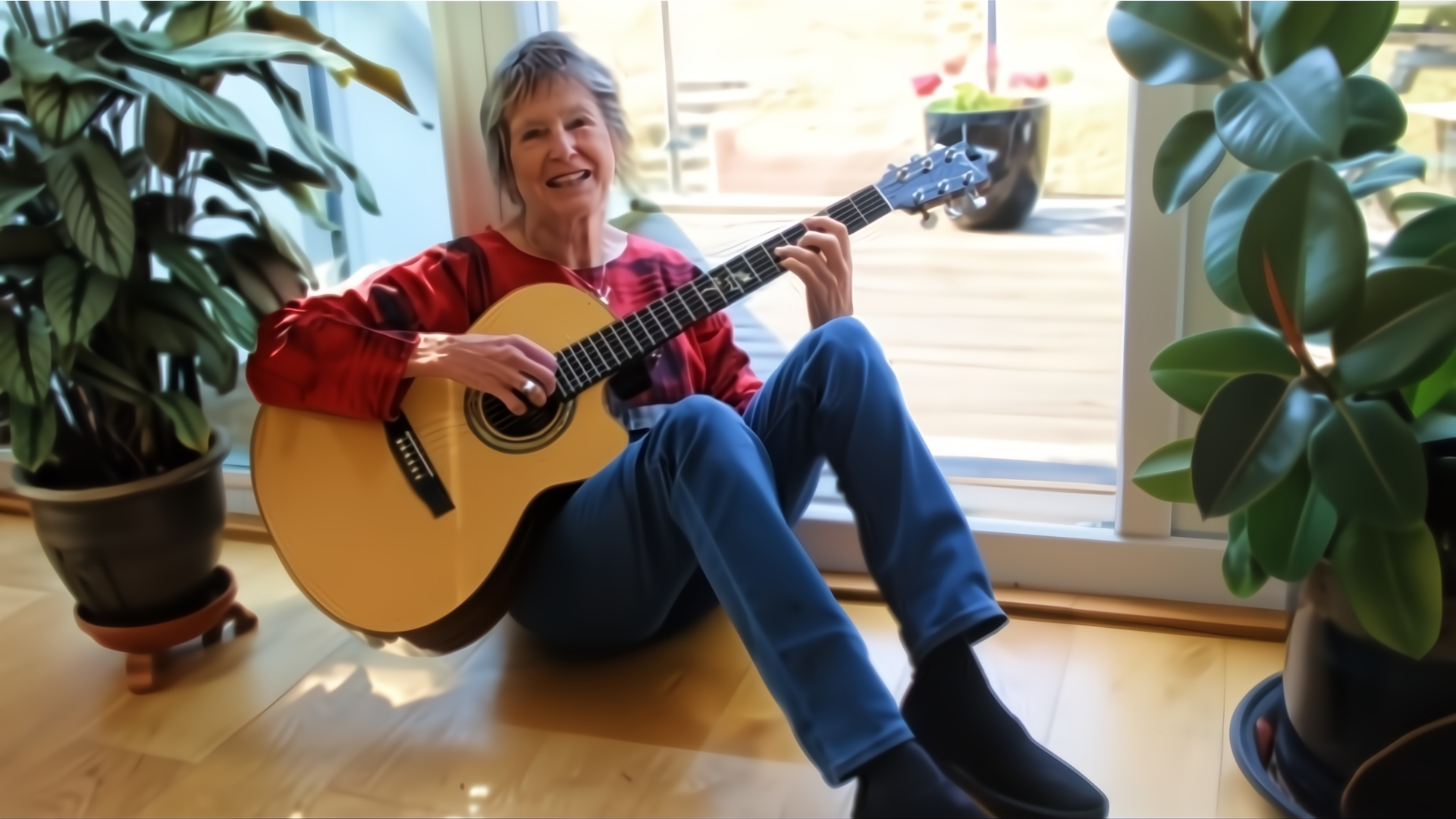
New 'rock' opera concept album ‘Sandy and Jean’ by Rosemary Schonfeld tells an important story of the kind of discrimination and pressures experienced by lesbians due to Section 28 during the 1980s and 90s. Rather than reviewing an otherwise excellent music release, we want to expand the scope of the topic being addressed in this release and provide our perspective on LGBTQ rights, human rights.
Gay rights were hard fought for and hard won.
Male homosexuality was not decriminalized in England until 1967. Even though the fight for rights in the UK and many other countries was ultimately successful, that success is incredibly recent, and cannot be taken for granted. In many countries lesbianism and homosexuality remain illegal, and lesbians are persecuted, sometimes murdered.
Up to this day several countries impose the death penalty for homosexuality, including Iran, Saudi Arabia, and Uganda, where laws can lead to severe punishments for same-sex relations. This practice is often rooted in strict interpretations of religious laws and has been widely condemned as a violation of human rights.
Neither of the Holy Books of Life - Bible and Quran - explicitly condemn homosexuality, - The words ‘sex’ or ‘sexuality’, much rather ‘homosexuality’ are (non-?)surprisingly absent - contrary to the interpretations made by the religions that were derived of them, and the religious laws that were epistulated by religious scholars - fellow human beings, not God, not Allah.
Even without the 'legal' or religious frameworks, discrimination towards lesbians and women at large, when part of a culturally accepted practice is a precursor to #Femicide - homicide specifically targeted at women, BECAUSE they are women. Femicide is a global phenomenon, not limited to any religious or cultural mainstream in particular. How many gay men are killed every year BECAUSE they are gay? When will this insanity stop?
Standing with gays for gay rights doesn’t imply that you are gay, it means you are human…
‘Sandy and Jean’, created by musician Rosemary Schonfeld was released as a rock opera concept album, the perfect format to address the issue. Set in the 1980s against the backdrop of the homophobic legislation introduced by the Tories, the UK Conservative Party:
Section 28 was a law in the UK that prohibited local authorities from promoting homosexuality or teaching its acceptability in schools, enacted in 1988 and repealed in 2003. It had a significant negative impact on LGBTQ+ individuals, fostering an environment of fear and stigma around discussing sexual orientation in educational settings.
Section 28, tells an important story of the kind of discrimination and pressures experienced by lesbians due to Section 28 during the 1980s and 90s, in particular lesbian mothers, which should never be forgotten.
'Sandy and Jean' covers a period of 15 years from the beginning in the 1980s, apart from the final number which takes place in 2025. Two young married mothers who meet at a toddlers group and fall in love with each other. Sandy is from a working-class background and is married to an upper middle-class man, Jon. They have two children. Jean is a divorcee and a teacher, also with two children.
From the initial euphoria of falling in love, problems soon start to manifest. At first Jon is happy to go along with a ‘progressive’ kind of relationship but begins to find it unsatisfactory. Sandy will not leave Jon for Jean, and as the years pass, Jean becomes increasingly dissatisfied. All this takes place against the backdrop of Section 28, where women lost custody of their children if they left their husband for a lesbian relationship. Teachers such as Jean, were also at risk of being fired if they ‘came out’.
In the 1980s, (and the 1990s, and into the 2000s) there were still no Gay Rights.
For example, up until the introduction of Civil Partnerships in 2004 (UK), if one of a gay couple fell ill, blood family members had the right to impose their choice of medical treatment and end of life care, disregarding the wishes of the partner. This sometimes extended to stopping the healthy partner having any contact with their ill partner.
The first country to legalize same sex marriage was The Netherlands in 2001, the same country in which 15 year old Kerwin Duinmeijer was murdered BECAUSE he was black, in 1983. This just shows how a society can advance on one side of the human rights spectrum, and still struggles in other fields.
The insecurity and pressures on gays and lesbians caused by lack of rights, led some to remain in heterosexual relationships even when it was not their true sexuality. Whatever the sexual orientation, power dynamics within relationships are affected by, among other things, status, class, money, income. ‘Sandy and Jean’ tries to adopt a sympathetic approach towards some of these issues.
The characterization of the three main characters (one lesbian, one bi-sexual, one heterosexual) is nuanced, incorporating issues of power dynamics and class, as well as sexual orientation. Things do not work out, but not simply because one character is ‘good’ and another ‘bad’. Relationships are complex, human beings are imperfect, and the heart rarely follows the head. However, the added pressures on a gay and lesbian relationship sometimes meant that it might falter, where a heterosexual relationship would survive.
To misconstrue and deny people the human right to self-determination, who to love and how to love, is a violation of Art. 1 of the UN Charter.
The Charter of the United Nations is the foundational treaty of the United Nations. It establishes the purposes, governing structure, and overall framework of the UN System. The UN Charter mandates the UN and its member states to maintain international peace and security, uphold international law, achieve "higher standards of living" for their citizens, address "economic, social, health, and related problems", and promote "universal respect for, and observance of, human rights and fundamental freedoms for all without distinction as to race, sex, language, or religion.
The Charter was established in 1945, right after World War II, when the world came face-to-face with the atrocities committed by the Nazi regime, perpetrated against Jews, LBTQ's, Jehovah's Witnesses, Roma and Sinti, the disabled, in short, against humanity at large.
The struggle for human rights is on-going and must never stop if we want to call ourselves humane. A topic that hasn’t lost relevance in today’s political arenas as discussion is flaring up again whereby sexual orientation is being conflated with gender and gender alteration.
Sexual orientation is part of our identity, not as a group, but as individual human beings. Identity IS, whether by birth or by choice.
Identity is human uniqueness, identity is whatever he.she.they self-identify it to be. Identity is sacred. Identity is to be respected at all times. When identity is being developed as part of a political agenda and associated with groups of people, then how much different is it from institutionalized racism? When policies are being developed that promote the rights of certain groups, it is ipso facto the constraint of the rights of others. Once we safeguard the right of the individual, we safeguard that of the group.
And what of the music?
The music is a blend of rock, rap, ballad and 'Sprechgesang' (sung language). Orchestral brass, strings and percussion, electric guitar, bass, keyboard generated sounds including 80s type Casio keyboard patterns, and voice, combine with the underlying often a-typical (in Western music) rhythms to produce songs and memorable melodies which can sit comfortably alongside popular musicals and can’t help but draw the listener in for repeated play with the insightful lyrics. It’s impossible not to be charmed especially by the likes of tracks with titles like ‘Everybody Hates Lesbians’.
A sensitive topic that needs to be addressed
Yes, it is a sensitive topic, yet it demands input from different — or every — quarter(s) for the very reason that we are shaping the future of identity politics as we know it. Our inaction or actions with regard to this matter will determine how the next decades will be.