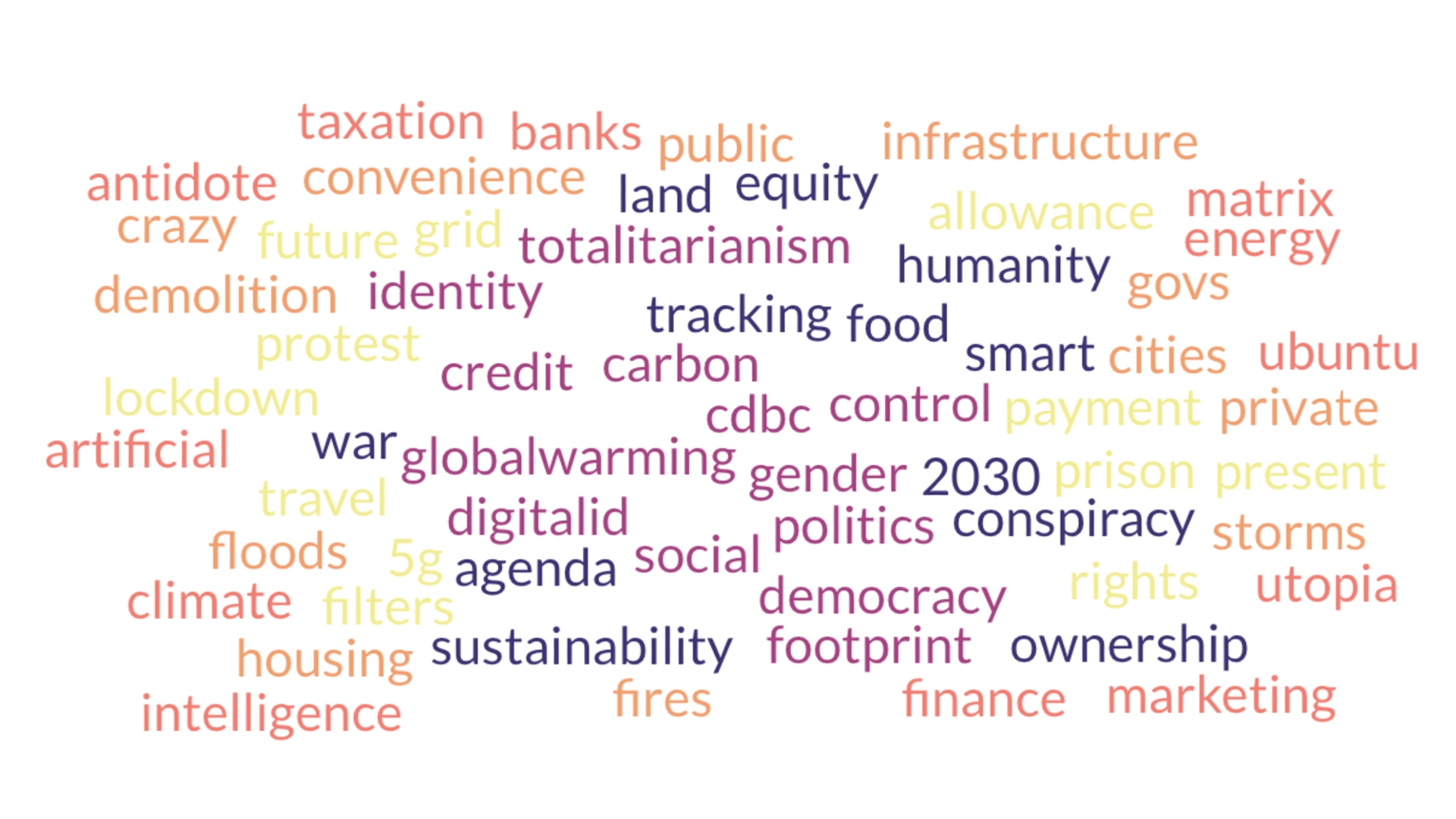
"You'll own nothing and you'll be happy" is a phrase attributed to the World Economic Forum. The phrase is based on a 2016 essay by Ida Auken of Denmark, published by the WEF, about a future in which a hypothetical person relies on the sharing economy for many of their needs. The phrase from the article, 'Welcome to 2030' and the philosophies expressed within it, has been used by critics who accuse the WEF of desiring restrictions on ownership of personal property. But what does it mean? How do the digital ID and wallet tie in to this narrative? Are these seemingly unrelated topics part of a bigger narrative? If they do, how are they related? How can we connect the dots?
Connecting the dots
The featured video in this article offers a possible explanation. It is centered around the topic of '15 minutes cities'. As you will see, many of the concepts and technologies that are touched in the video have been covered in the news elsewhere or are part of seemingly unrelated narratives. The Digital ID and wallet appear to be cornerstone technologies essential to the roll-out of this dystopian future that is right around the corner.
Recent events have caused to flare up the discussion around the Digital ID when UK Prime Minister, Keir Starmer, announced plans for a mandatory digital ID system in the UK, known as the "Brit Card," which will be required for anyone wanting to work in the country. The scheme aims to enhance border security and simplify access to government services, with implementation expected by the end of the current Parliament, before August 2029.
You will not be able to work in the United Kingdom if you do not have digital ID - UK PM Keir Starmer at the Global Progress Action Summit, London UK, Sept 26, 2025
The outcry over its implementation is not grounded in a single controversial measure tied to the ID - no, there are myriad of issues pertaining its introduction, some superficial, others fundamental to the way modern day and future societies function. In order for us to be able to understand what both critics and proponents bring about, we have to get a grasp of what a digital ID is.
What is a digital ID?
A digital ID is an electronic version of a traditional identification document that allows individuals to verify their identity online. It can be used for various purposes, such as accessing government services or proving age, and is designed to enhance security and privacy in digital transactions. Many nations like Estonia, Denmark, and Canada have implemented digital ID systems, focusing on security and user privacy. They are in essence a way for citizens to interface with government services and can be quite useful in terms of security, transaction speed, and ease-of-use which has been voluntary - at least so far.
The ID acts as a gateway which can be shut down, become obstructed, or simply fail, with disastrous consequences if and when alternatives are not available. So far they have been, but who is to say what the future holds?
Starmer was not the first to address the Digital ID, but he was the first high-level government official to publicly stress the mandatory character of the DID and shift the focus from the public service realm to the private - that of employability. The UK government plans to roll out a digital ID system by 2029, making it MANDATORY for those seeking work, as it is considering to include children aged 13-16 in the scheme, as many already work part-time.
Herein we can already observe scope creep. It is safe to expect that once the ID has found broad adaptation amongst the populace, its functionality and scope will expand. We might also see the introduction of different ID's for different purposes, much like we currently hold more than one bank card, insurance or medical ID. We store these in our wallets or purses. This concept is no different in the digital realm.
What is a digital wallet?
A digital wallet is a software application that securely stores payment information and other credentials, allowing users to make transactions and manage them digitally. The digital ID is stored within the digital wallet for easy access and sharing.
As there is no uniform framework on what digital wallets must look like or contain, the information you can store in them and the uses you put them to can vary considerably. Some countries provide multiple wallets to their residents depending on their needs, how siloed their data is, and whether they have a centralized, decentralized, or hybrid approach to storing an individual’s documents that make up their digital identity.
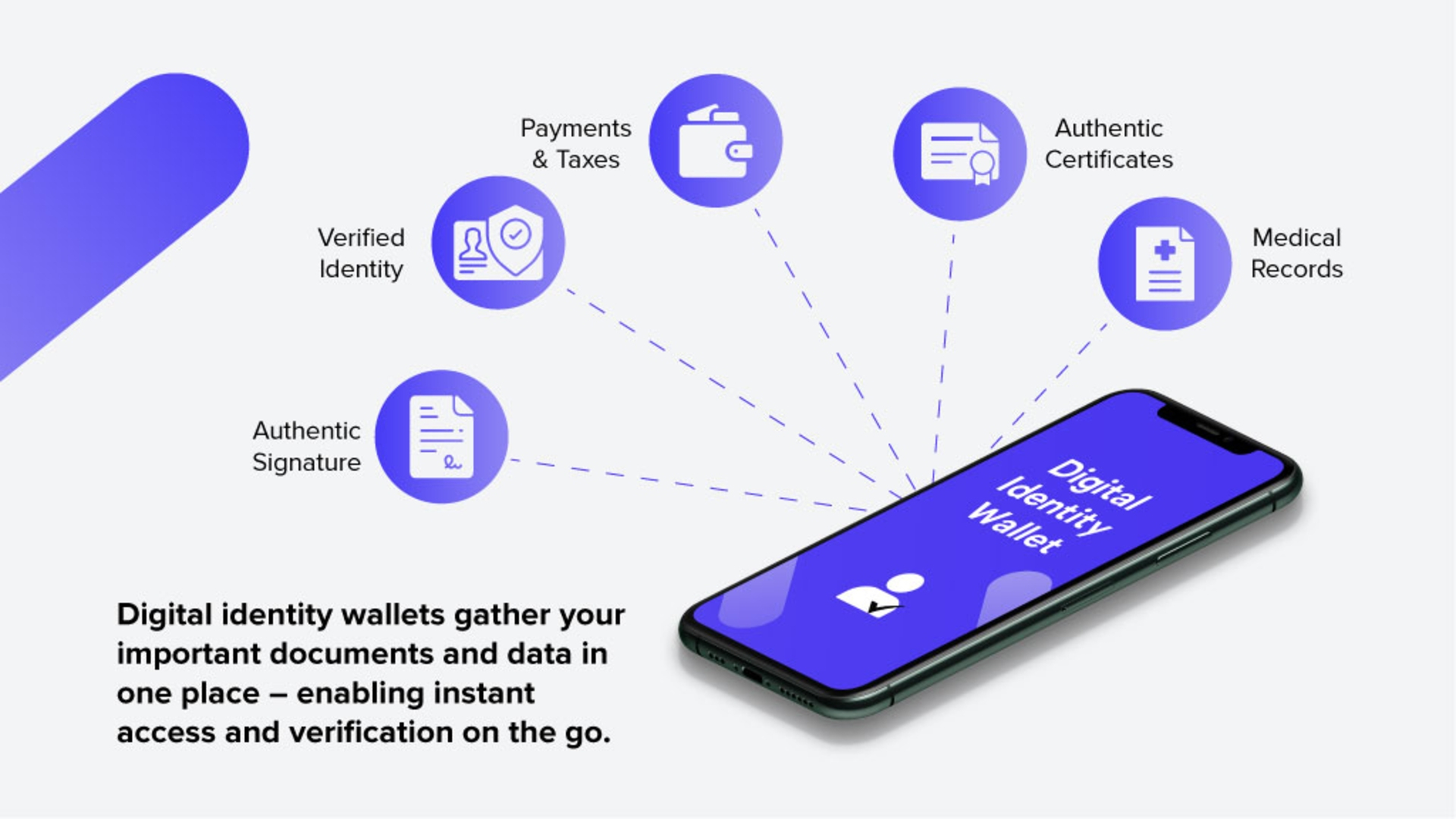
There is no technical imperative as to how ID's and wallets will be implemented - 'VOLUNTARY vs. MANDATORY' is therefore a matter of choice.
Generally, digital identity wallets will include your identity details (name, date of birth, national identification number, passport, citizenship, visas), with some wallets including financial details (banking, your tax number, insurances) as well as other information related to - but not limited to - your identity (medical records, credentials, certificates, driver’s license, personal signature etc).
Centralized vs. Decentralized
This new technology that is at our doorstep is 'neutral' as ever so often is the case. For instance, when nuclear energy was conceptualized in the early 20th century, a nigh unlimited source of energy could be envisioned - its first use case was, as we all know, far more sinister and destructive. Technology is, in principle, neither malign nor benign - the way we choose to implement it and deploy it is.
For us to better grasp the potential implication of the introduction of this new technology we need to understand how the decision-making process is being organized - or rather - has been organized. For the most part, the technological parameters that guide the deployment of these tools into society have already been determined. For instance, the European Union is introducing a Digital Identity Wallet, which all member states must adopt by 2026. Member states are free to choose their technology partners and system integrators. However, there is no way back from the fundamental choice for this type of technology.
The level of control over what type of data is being stored - and more importantly, who is able to access and potentially share it - is a key design feature, that in return is determined by the architecture of these systems. There are basically two flavors to choose from. Either centralized or de-centralized.
Centralized
In a centralized system, authority over and control of data is concentrated at the top level (a.k.a, the state), or its legal representative. An example of a centralized technological system that is relevant to this discussion is the CDBC - the Central Bank Digital Currency - a digital currency issued by a central bank, serving as a new form of legal tender. The currency is held in a digital wallet, its balance accessed and managed with a digital ID. On the surface level no different than online banking in its current form. However there's a catch. We're not dealing here with a private, publicly held entity, a bank, we are interfaced with the state or one of its institutions. This is a fundamental shift from what we traditionally understand 'banking' to be.
Furthermore, this new digital currency is programmable. Whereas traditionally bank are regulated, limited, in what they are allowed to do with your money, who is to say that states won't legislate additional functionality into this currency? So called 'carbon credits' are the first that come to mind. When our monthly expenditure is limited to a predetermined equivalent in carbon consumables, are we then still the sovereign owner of our money?
How will these carbon credits be determined? By means of our 'social' status? Via our 'relevance' to society? Are we still in control of our lives when the CDBC becomes the only currency available regardless whether we own and hold domestic or foreign currencies?
Decentralized
In a decentralized system there is no central authority. Authority is distributed across various levels with little or no interaction between them. The best known example of a decentralized technology is BitCoin. Bitcoin is a decentralized digital currency that operates without a central authority, allowing users to transact directly with one another through a peer-to-peer network. This decentralization is achieved using blockchain technology, which records all transactions in a public ledger maintained by all the participating computers within the network.
There is no principal ownership of the data that is being generated and stored. Ownership and control of the currency involved remains where it is, private and individual.
Proponents of centralized systems argue that their technology is as safe, if not safer, as convenient and expedient towards the needs of modern societies. If this is true, one poignant question remains:
Do we (en)trust our governments with this?
A government is the system or group of people governing an organized community, generally a state. Government normally consists of legislature, executive, and judiciary. Do we (en)trust our legislature, executive, and/or judiciary with the control over our digital identity, access to the private data that it is being comprised of, and the authority that has been delegated to them.
For the most part, the answer is 'no' as many countries in the world are not governed by the "one person, one vote" principle fundamental to democratic systems. Furthermore, we can observe the increase in influence of NGOs, lobbyists, and fundraisers in the decision making processes of countries that uphold democratic principles, or at least pretend to do so.
Swiss voters recently approved a plan for voluntary electronic identity cards in a narrow referendum, with 50.4% in favor [after they voted the proposal down in the first round]. This new system allows citizens to store their data on personal smartphones while maintaining the option to use traditional identity cards.
The technocratic kill switch
The biggest objection against the introduction of digital centralized technology is that it enables states to exclude its citizens from society at the press of a button - the kill switch - whenever they are of the opinion that these citizens are non-compliant in one way or another, or otherwise do not meet pre-determined technocratic and/or social standards.
We do not have to go far back in time when at the time of the corona pandemic non-vaccinated were excluded from (parts of) public life by means of a QR code scan app.
With iOS 15.1, you can securely download and store your verifiable COVID-19 vaccination information in the Health app and add a vaccination card to Wallet. - Apple IOS 15.1 technical reader
Or what to think of China's social credit system? The technocratic use cases for this new type of technology are endless - so is the potential abuse by governments that don't have the best interests of their citizens at the core of their policies.
Digital ID - a Trojan horse?
Why do we need a digital ID in the first place? Are modern societies unable to function properly without these new technologies. Are speed and convenience enough of an argument to introduce these technologies without proper cost-benefit analysis?
Our modern day existence is, in an ever-increasing measure, tied to the internet. One digital ID and wallet to access and authenticate with medical, banking, government and host of other public/private services may in itself introduce a single point of failure to our digital existence regardless of the good intentions with which they are being introduced.
What if these intentions are less benevolent? If we cannot exclude this option, we must examine it - if true, do you allow yourself to be led like cattle to the slaughterhouse? When false, will you continue to graze on like sheep in a herd?