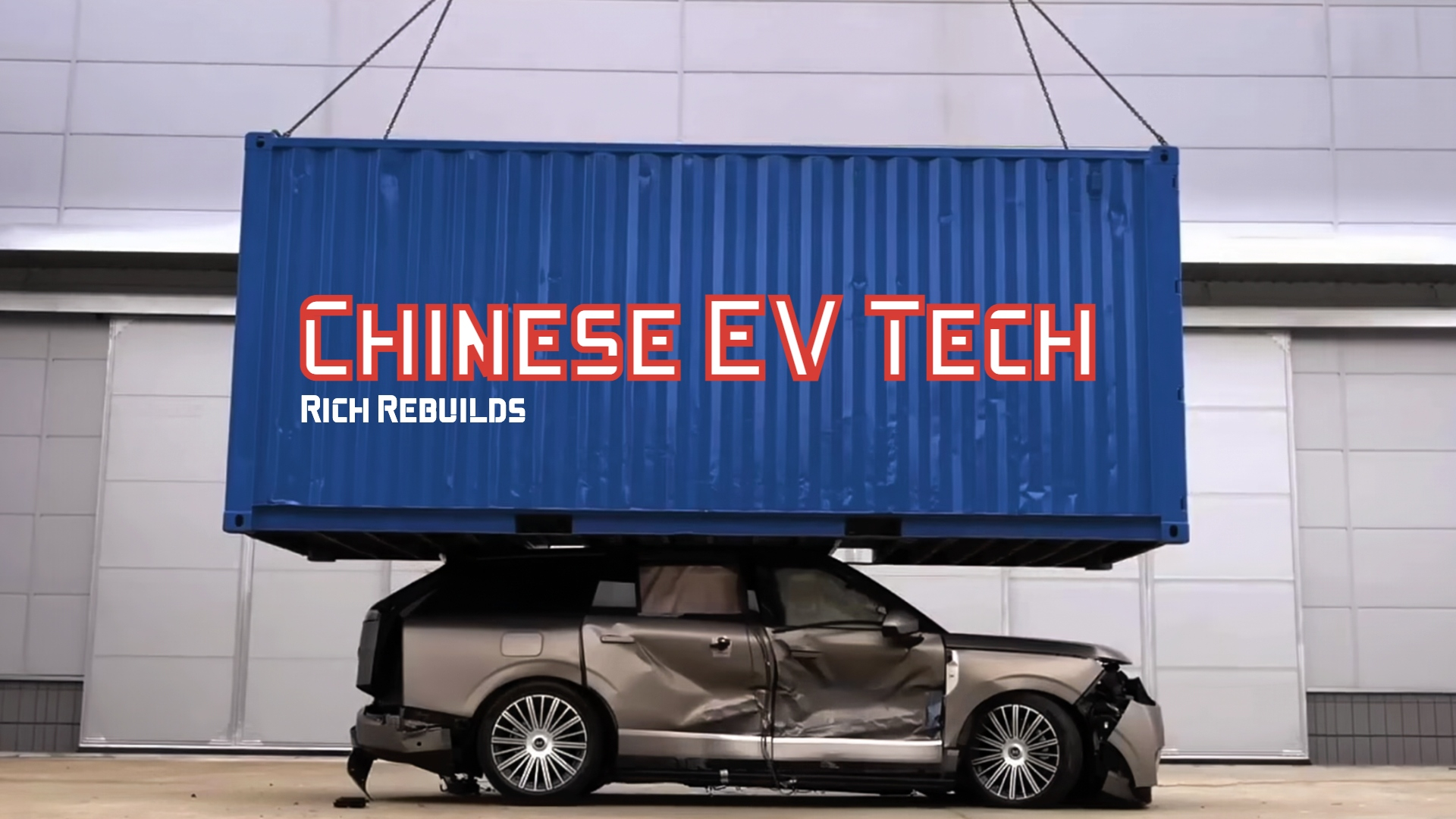
I have been very skeptical about electrical vehicles from their inception more than a decade ago. I felt EVs were hyped. Saving the planet? Nah. Cheaper? Certainly not. Safer? Perhaps, until the battery caught fire. To me EVs seemed just another vehicle for the virtue signaling segment of the middle class in mostly Western societies. It made me cast away EVs to the scrapheap of human folly. Until recently.
I have a general interest in (automotive) engineering, and it was in watching a couple of videos about the engineering that goes into EVs some time ago that I realized my somewhat politicized opinion of EVs had obfuscated and kept me from evaluating them on their engineering merits. I decided to give EVs a second chance.
Watching this video convinced me that EVs are the future of automotive transportation.
Virtue signaling
Apart from my sentiments, I always have had more objective concerns with regards to EVs:
- price point
- hyped capabilities (i.e. self-driving)
- weight
- durability
- environmental impact from (resource) production and waste disposal
- underdeveloped battery tech
Currently, I am the proud owner of a 20-year-old hatchback with a combustion engine (ICE), and I plan to drive it until the engine ceases. I dread the moment when I have to decide on purchasing a replacement vehicle. In my view, modern-day cars are over-engineered, stuffed with electronic gadgetry I have no need for. The build quality is less when compared to cars 10-15 years ago, and therefore more maintenance-heavy.
Part due to ever-increasing environmental regulations and ‘shrinkflation’, it seems modern cars are past their prime and offer significantly less of a value proposition when compared to products of previous decades once you look beyond the marbles and pearls of electronic wizardry. The cars in the featured video seem to point to a different direction: it appears that the Chinese manufacturers are on the opposite side of the curve, offering more, instead of less, with each new iteration of their product.
You’ll own nothing and be happy
My future car will be an EV and this video has convinced me of it. Will I purchase one at retail price or consider a second-hand one? HELL NO!. As private lease is becoming more and more prevalent, I consider it a viable option. “You’ll own nothing and be happy.” Yes indeed, and I have no qualms about that, at least where it concerns cars.
Average MSRP of EVs has lowered considerably. Although I’m too old-fashioned to hand over control of my car to a computer, yet one has to think of the possibilities it offers to the disabled or the elderly. Self-driving trucks will have a fundamental impact on the transportation sector and will relieve humans from an otherwise very unhealthy occupation.
When the weight of EVs - i.e. the battery - reduces to loads that are comparable to current ICE variants, the strain on roads, bridges and other infrastructure will be within the limits of what they originally were designed for. Apart from the battery and electronics, EVs make use of existing technology - for instance, the drive train - and are made from far fewer parts than ICE cars. Reduced stress on logistics chains seems, therefore, plausible. Once batteries have become more durable, there seems no limit on the mileage that can be extracted from EV cars. Where 1 million-mile ICE cars are a rarity, this may become more feasible for EVs that have their batteries replaced.
Powers Of Ten
The introduction of Sodium-ion batteries looks very promising. Without knowing the full detail of this technology, we all know that salt is abundant, which may lay lead to less of a propensity for one country to invade another for its resources. EVs contributing to world peace? Who would have thought of that? Interestingly, salt, or rather molten salt, is a keystone of the technology that promises to make nuclear reactors much safer as it inhibits them from exploding. Maybe the time has arrived to set aside some capital for shares in my local salt mine? In any case, we need power, electrical energy. Lots of it. EVs are not going to diminish this dependency.
Circularity
One thing I remain skeptical about is the environmental impact of EVs; although I am starting to think this has less to do with EVs per se, but much more with humanity’s inability, or, rather, unwillingness to attribute and include ‘waste’ as an integral part of manufacturing costs. For as long as we remain focused on the supply side of the logistics chain and ignore the disposal side of it, ‘circularity’ will remain a buzz word.
In conclusion
Why salt? It seems like the truth has been staring in the face all the time. I think it did, yes. The most abundant resource next to water. Yet we failed to recognize it as such. I would argue it is a matter of time, enlightenment and education. Humanity is still in its infancy, locked into an everlasting cycle of death and destruction on one side and recovery on the other. Brief moments of enlightenment have resulted into massive strides forward. The forces of evil and ignorance are strong.